
How to Search the Elbert County Court Docket
Start with whatever court is printed on your paper. A citation, pleading, or hearing notice names it directly. That name decides where the Elbert County court docket lives. The Georgia Courts E-Access page will not hand you one unified docket. It is a routing layer. It points searchers toward approved vendors and participating courts. PeachCourt is one of those vendors. Its criminal-court list does not currently include Elbert County. Because of that gap, the official clerk channels matter most. Superior, State, and Juvenile matters begin with the office of Leigh W. Starrett. Probate and Magistrate filings begin with their joint office instead. City citations stay with the issuing municipal court.
Bring the right details before you search. You will want the full party name, the case or citation number exactly as printed, a rough filing date, and the court class. A generic eFileGA example like 2019-CV-012345 shows one possible civil format. Elbert County's current display format may differ. So never reshape your number to match the example. A blank result can mean many things. It could be the wrong court, a spelling difference, a recent filing, an older file, or a protected case. It is not proof that no case exists.
- Read the source paper and identify Superior, State, Juvenile, Probate, Magistrate, Elberton Municipal, or Bowman Municipal Court.
- Try the court-approved vendor route by exact party name or complete case number when that court is available.
- Read the entries from newest to oldest for a filing, order, reset, disposition, or setting.
- If the view is blank or incomplete, use the correct clerk phone, counter, mail route, or public terminal.
- Request a plain or certified copy from the custodian when the online text is not enough.
Elbert County Docket Search Channels
The Historic Courthouse clerk's office holds three public terminals. Each is labeled Civil, Criminal, or Real Estate/Lien. They need no account. That helps when a vendor page skips the court or hides a filed image. The same counter takes in-person requests for Superior and State Court files. Staff there can also explain the phone or mail steps. Probate and Magistrate records live at a separate office. One counter never covers every case class in Elbert County.
| Channel | Best use | Limit |
|---|---|---|
| Georgia E-Access | Find an approved court or vendor route | Not a universal county database |
| Clerk terminals | View Civil, Criminal, and Real Estate/Lien indexes | Requires a courthouse visit |
| Clerk counter, phone, or mail | Older files, copies, and unclear results | Correct custodian must be identified |
| City court | Municipal traffic and ordinance matters | City and county citations use different routes |
Still missing a record? A written Georgia Open Records Act request can identify the file and the office that holds it, though court access rules and judicial orders may still limit particular material.
What an Elbert County Court Docket Shows
A public Elbert County court docket opens with the basics: case number, filing date, court, judge, case type, caption, and status. Parties and counsel come next. Then the docket lists dated filings, service events, notices, motions, orders, hearings, pleas, judgments, and disposition. Criminal cases may add charges, bond data, and sentencing events. Civil cases may name the claim type. They may also show a judgment, garnishment, writ, or other post-judgment work. Fields vary by court and vendor. A docket line may be public even when its document image stays unavailable.
| Case Number | The unique court identifier; copy the full number from the notice. |
|---|---|
| Parties | The caption, such as plaintiff and defendant or State and defendant. |
| Docket Entries / Filings | A dated register of pleadings, motions, notices, orders, and service. |
| Hearing Settings | Date, time, type, judge, and location when the system exposes them. |
| Court & Judge | The court class and assigned judicial officer. |
| Disposition | The outcome, judgment, sentence, dismissal, or other closing event. |
Reading Elbert County Docket Terms
Elbert County publishes no official abbreviation sheet. Full entry text beats a code borrowed from another Georgia county. A continuance or reset only moves a setting. It does not dismiss the case. A disposition is the result; a docket entry is just one dated event, so ask the clerk about any unexplained vendor shorthand before acting on it.
- Setting
- A scheduled court event with a date, time, type, and place.
- Calendar call
- A review of case status, readiness, and scheduling.
- Order
- A judge's written direction or ruling.
- Disposition
- The event or result that resolves a charge, claim, or case.
- Certified copy
- A clerk-authenticated reproduction of a court record.
Terms like arraignment, plea, default judgment, garnishment, and fi fa mark different stages or remedies, but their presence says nothing about what happened later. Read the full sequence.
Which Elbert County Courts Keep Dockets
Elbert County sits in Georgia's Northern Judicial Circuit. Superior Court serves as the general-jurisdiction trial court. It handles felonies, domestic and equity matters, major civil cases, and appeals from the lower courts. State Court takes misdemeanors, traffic matters, warrants and felony preliminary hearings, plus civil work outside Superior Court's share. Juvenile Court covers protected delinquency, dependency, and related cases. Probate and Magistrate Courts run separate offices with distinct dockets, while Elberton and Bowman each keep a municipal court for city-level matters.
| Court | Docket Covers | Where to Search |
|---|---|---|
| Superior Court | Felony, domestic, equity, major civil, appeals | Clerk of Superior, State & Juvenile Courts |
| State Court | Misdemeanor, traffic, warrants, preliminary hearings, civil | Unified clerk and approved electronic routes |
| Probate / Magistrate | Estates, guardianship, warrants, bonds, lower civil claims | Probate/Magistrate office |
| Municipal Courts | City traffic and ordinance cases | Elberton or Bowman city court |
Elbert County Courtroom Venues
The court's name does not always name the building. Official Northern Circuit standing-order material lists three possible Elbert County venues: the Historic Courthouse, the Government Center, and the Board of Commissioners Meeting Room. So read your hearing notice for the room and street, not just the date. The clerk's main counter sits in the Historic Courthouse. Your proceeding may be set elsewhere.
That split matters when a docket entry is short. Keep the exact building and room wording from the newest notice or order. If the online entry and the written notice conflict, call the clerk or the court coordinator. A generic courthouse address is not enough. Specially set matters can also run outside ordinary business hours. Office hours never prove a hearing time.
Finding Elbert County Court Dates
For an Elbert County court date, trust the latest notice or order first. Then confirm with the clerk or court coordinator. A current docket setting helps, but an old printed calendar, payment page, or earlier entry may be stale. Read newest to oldest. Watch for terms like notice of setting, continuance, reset, order, calendar call, plea, bond, motion, or trial. Write down the judge, time, room, case number, and setting type together.
The county hosts no daily calendar search form. Practical channels include the newest vendor entry, a written notice, the public terminals, the right clerk phone, court postings, and official emergency orders. Elberton publishes a recurring municipal schedule. Bowman requires direct confirmation. The full process appears in the Elbert County court calendar reference.
When Elbert County Settings Move
A docket entry can keep the original setting and the change side by side. When Elbert County resets or continues a case, the clerk usually adds a new event. The old one is not erased. So don't stop at the first date you see. Weather matters too. Georgia Courts has posted Northern Circuit emergency orders touching Elbert County. They cover Hurricane Helene in 2024, a local judicial emergency in 2025, and Winter Storm Fern in 2026.
Use the newest source. Compare the latest docket event with the written notice, then call the correct court when dates or venues conflict.
Showing up by video is never automatic in Elbert County. Some older notices mention virtual bond hearings and pandemic-era capacity limits, but the court posts no general video link now. Plan on remote appearances only when a judge's order allows it for your specific case.
Public Access to Elbert County Dockets
Georgia Superior Court files are open to the public. A statute, a court rule, or a signed judicial order can say otherwise. An online docket can list every entry while still hiding the underlying images. So the record you see may be less than the record that exists. Georgia's e-filing rules come with a promise attached. Anything filed that way gets free electronic viewing at the courthouse, or a paper fallback. That in-person route matters most in Elbert County, since each court here sits on a different mix of vendor coverage.
Key Rules:
Uniform Superior Court Rule 21 states the general rule of public access and recognizes lawful restrictions.
Uniform Superior Court Rule 21.6 requires protected identifiers to be redacted or kept on a restricted page.
Georgia Open Records Act, O.C.G.A. §§ 50-18-70 and 50-18-71 governs written public-record requests, exemptions, response duties, and lawful costs.
Restricted Elbert County Court Records
Not everything belongs on a public docket. Juvenile cases, adoptions, sealed files, and similar protected matters stay out of ordinary Elbert County court docket results. A search may leave a case out entirely. It may show only a restricted label. It may list an event while blocking the document image. Social Security numbers, financial account data, and other protected identifiers get masked too. So a blank field can mean a redaction, not an event that never happened.
Before concluding that an Elbert County case is sealed, double-check a few things. Verify the court class, the name spelling, the case number, and the venue. Probate, Magistrate, municipal, Juvenile, and federal cases each sit with a different clerk. PeachCourt itself warns that sealed documents, adoption material, and unexecuted proposed orders may simply be unavailable. The clerk can tell you what request, proof of identity, party status, or court order unlocks access. A vendor screen can never grant it.
The Elbert County Clerk and Docket Records
Leigh W. Starrett serves as Elbert County Clerk of Superior, State & Juvenile Courts. The official clerk page gives the records office and contact details. Copy charges and the three public terminals appear there too. Start any case lookup with the docket or the index, not the file itself. Once you locate the matter, pause. Pin down the exact filing, order, judgment, or disposition you need. Know the difference between a plain copy and a certified one. Only the official custodian can certify.
Clerk of Superior, State & Juvenile Courts
12 South Oliver Street
Elberton, GA 30635
706-283-2005
Elbert County Copy Fees
Copy fees in Elbert County follow the clerk's published rates. A plain page runs $1. Certified copies cost $2.50 for the first page, then $0.50 for each page after that. Confirm the totals with the clerk before placing a large or unusual order. These rates cover the records the clerk lists. The clerk offers no county-wide online fee calculator. There is no turnaround promise on certified copies, and no single payment rule fits every request.
| Record product | Published amount |
|---|---|
| Plain copy | $1 per page |
| Certified copy, first page | $2.50 |
| Each added certified page | $0.50 |
Probate, Magistrate, municipal, and federal files each sit with their own office. Ask that office directly for its current fee schedule. One caution: a payment receipt or vendor printout is not a certified court record, so if you need the real thing, request certification from the clerk.
Elbert County Dockets Go Digital
Georgia mixes local clerks with statewide standards and private electronic services. eFileGA handles electronic filing. Georgia Courts E-Access points the public toward participating systems. PeachCourt can surface docket events plus some documents. Availability varies by court, though, and your account status can limit what documents open. PeachCourt's current criminal listing also leaves Elbert out. The county's public terminals remain the dependable alternative for an Elbert County court docket.
Filing and searching are two different things. An attorney may file through an approved system. The public still cannot run the same docket search or view the same image without an account. A real-estate or lien index is not a civil case docket either. The Georgia Courts data and records page lays out statewide resources. The originating clerk stays the official source for any Elbert County file.
Start locally with the Elbert County website, which links to each office page. Check current contacts there before you travel or mail off a records request.
The county's own site is the place to verify routes to its court offices. The clerk's official page gives the counter and terminal details you need for an Elbert County docket request.
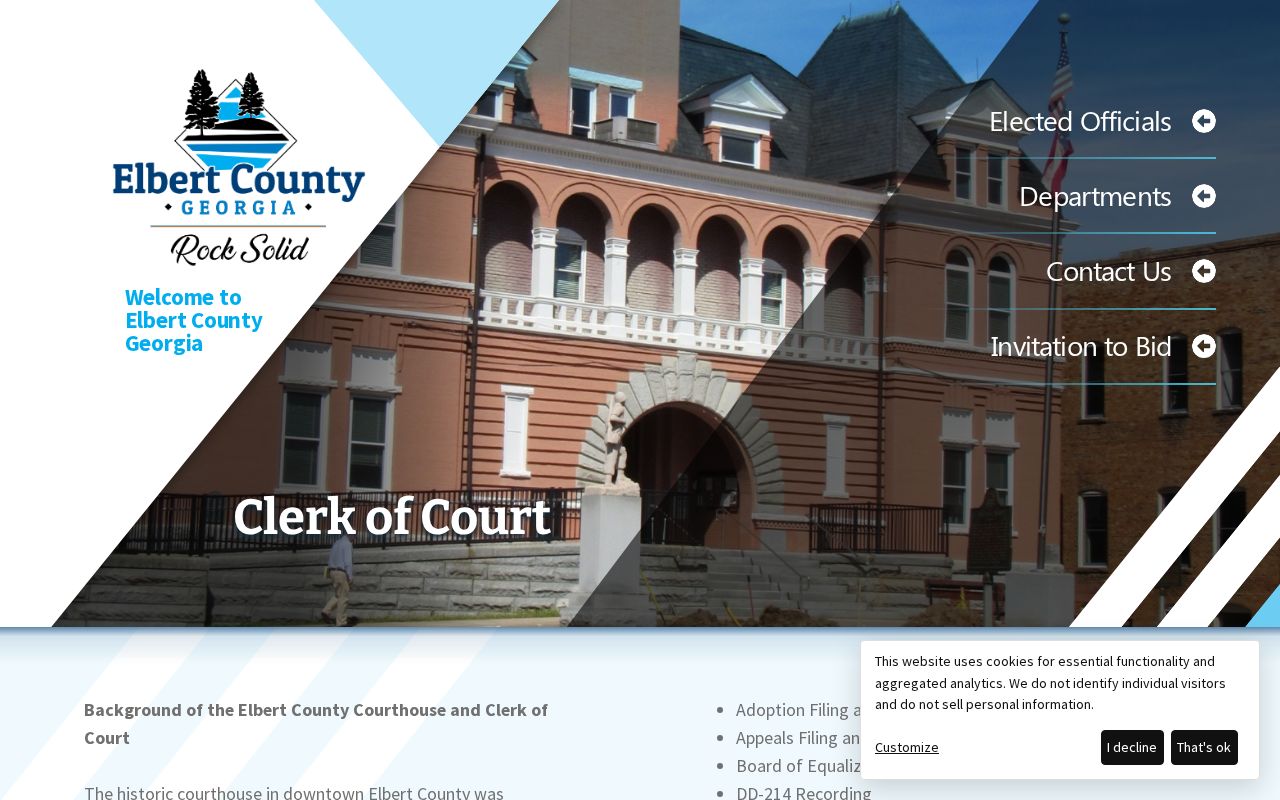
The unified Superior, State, and Juvenile clerk keeps Elbert County's dockets for those three courts, and that job sits apart from the county's other court offices. Probate and Magistrate records live elsewhere. The county's official Probate and Magistrate page makes the split plain, since those case files never start at the unified clerk counter. View the official Probate and Magistrate Court source.
The county's own page names the separate lower-court office that handles those docket classes. Georgia Courts' data and records source adds the state-level routing layer around local Elbert County court records.
The state page helps you spot which systems exist. It cannot replace the Elbert County clerk who holds the original case files. Georgia court research and statistics offers aggregate context, not a lookup for one Elbert County case.
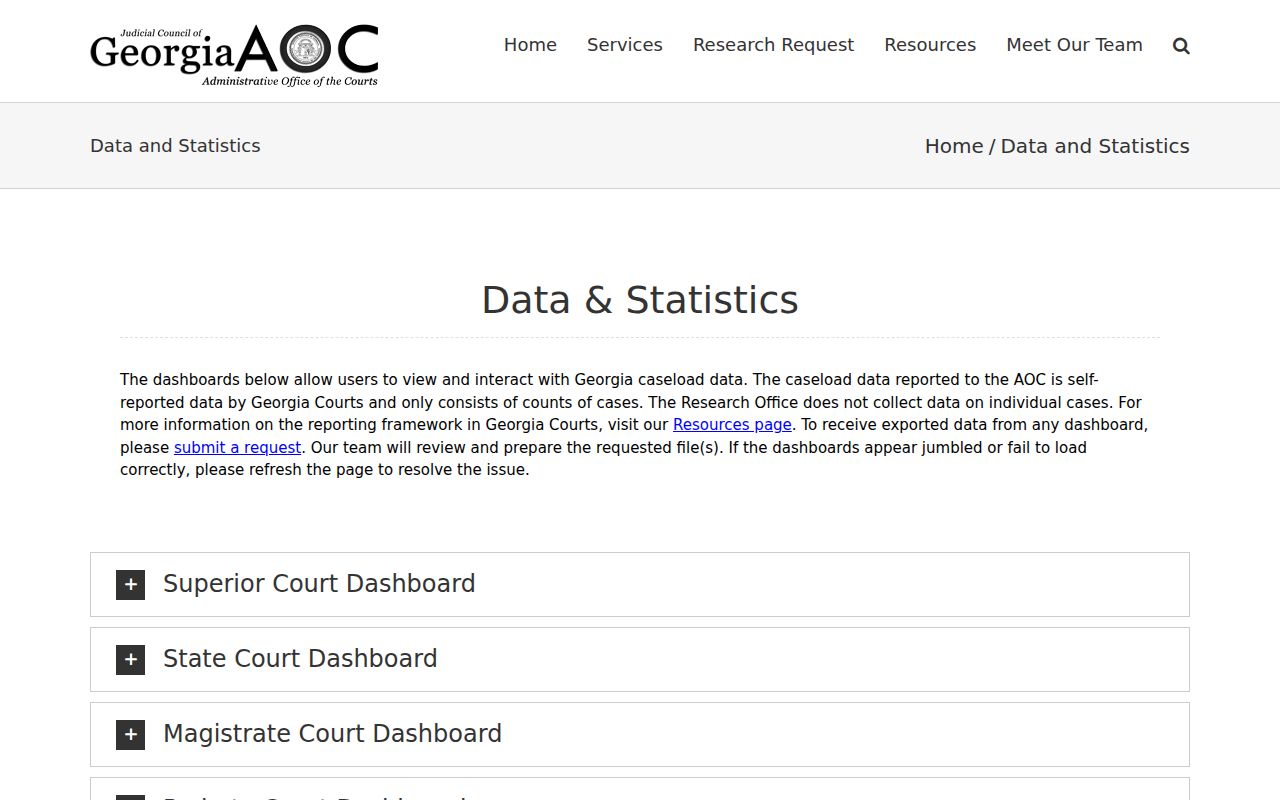
That distinction keeps statewide totals from being mistaken for a local docket or a case result.
Court Dockets by City in Elbert County
Elbert County contains just two incorporated cities: Elberton and Bowman. The 2020 Census puts 4,640 people in Elberton and 872 in Bowman. Each city runs its own municipal court. Elberton makes the path easy. Its city site offers a court page, a session pattern, and instructions for paying a citation. Bowman is different. Its charter does create a municipal court. The city's website posts no docket viewer, no schedule, no payment portal, no judge listed, and no separate court phone line. For a Bowman court docket or case lookup, start at City Hall and ask the staff there.
Elberton Court Docket
Population 4,640 · Traffic and city-ordinance cases use Elberton Municipal Court.
Bowman Court Docket
Population 872 · City Hall confirms the municipal calendar, custodian, and payment route.
Map and Directions to the Historic Elbert County Courthouse
Superior, State, and Juvenile Court records are kept at the Historic Elbert County Courthouse, 12 South Oliver Street, in downtown Elberton. The Clerk of Superior, State & Juvenile Courts operates the public counter there and runs three public terminals covering Civil, Criminal, and Real Estate/Lien records. Probate and Magistrate Court files are held separately at the Elbert County Government Center, 45 Forest Avenue, and some circuit hearings are noticed instead for the Government Center or the Board of Commissioners Meeting Room, so a courtroom notice should always be checked against the building it names.
Clerk of Superior, State & Juvenile Courts
12 South Oliver Street
Elberton, GA 30635
706-283-2005
The county's building-facts page lists free on-site parking, restrooms, and accessibility, with a Monday-Friday, 8:00 a.m.-5:00 p.m. window; call the clerk before a certified-copy trip since a separate published hours source was not found for the courthouse itself. Courtrooms are open, but Rule 22 restricts recording devices unless the judge permits, and visitors should expect courthouse screening.