
How to Search Civil Dockets
Civil cases in Superior and State Court begin at one office. That office is the Elbert County Clerk of Superior, State and Juvenile Courts. Georgia Courts E-Access lists both courts. But it sends you to vendors. There is no free county search form there. The clerk links PeachCourt and Odyssey eFileGA. Those are account and filing products, not anonymous docket access. Search with the full number printed on your pleading or notice. Elbert has published no local civil-number format. There is no wildcard method, no date filter, and no status list. Treat 2019-CV-012345 as a generic vendor example only.
- Decide whether the case belongs to Superior, State, Magistrate, or Probate Court.
- For Superior or State Court, follow the official E-Access route and the clerk-confirmed vendor.
- Search by the complete case number, or by party name if the system permits it.
- Open the match and read entries in date order, including later resets and orders.
- Use the civil terminal, telephone, counter, mail, or a written request when online access fails.
Elbert County Civil Dockets Stay Separate
Each Elbert County court keeps its own civil docket. Superior Court takes major civil, equity, domestic, and family matters. State Court holds limited-jurisdiction civil cases. Magistrate Court is the entry point for lower claims, judgments, writs, and fi fas. Probate Court keeps wills, estates, and guardianships. The county publishes no current Magistrate claim ceiling. Confirm jurisdiction with the clerk before assuming any dollar limit from another county.
| Court | Typical civil material | Custodian |
|---|---|---|
| Superior | Major civil, equity, domestic and family cases | 12 S Oliver, 706-283-2005 |
| State | Limited civil cases | 12 S Oliver, 706-283-2005 |
| Magistrate | Lower claims, judgments, writs and fi fas | 45 Forest Ave, 706-283-2016 |
| Probate | Wills, estates and guardianships | 45 Forest Ave, 706-283-2016 |
Municipal courts handle traffic and ordinance cases, not the county civil docket. If a Superior search comes up blank, Magistrate or Probate may hold the record instead.
What a Civil Docket Shows
A public Elbert County civil docket should show the court, case number, filing date, judge, case type, caption, and status. The register then logs each step with its date: the complaint or petition, service, answer, motions, notices, signed orders, settings, and the final judgment. After judgment, expect entries like garnishment, a writ, fi fa, satisfaction, or an appeal.
| Case Number | The court's unique identifier, copied exactly from the source document. |
|---|---|
| Parties | Plaintiff or petitioner, defendant or respondent, and counsel where public. |
| Filings | Complaint, petition, answer, service return, exhibits, and later papers. |
| Motions and Orders | A request and the judge's signed response are separate docket events. |
| Judgment | Final result, dismissal, default, agreed judgment, or other closing order. |
Elbert County publishes no local abbreviation sheet. Read the full display text, and ask the clerk when a code is unclear. A filing line proves the paper was docketed, not that an attached image is a certified copy.
Elbert County Civil Docket Terminals
The clerk lists three public courthouse terminals: Civil, Criminal, and Real Estate or Lien records. The civil terminal at 12 South Oliver needs no account. It covers Superior and State civil matters. Do not assume it reaches Probate or Magistrate records. Those records sit at 45 Forest Avenue. The official Odyssey eFileGA landing page shows the filing account environment used in Elbert. The page makes that distinction clear. E-filing and public docket viewing are two different things.
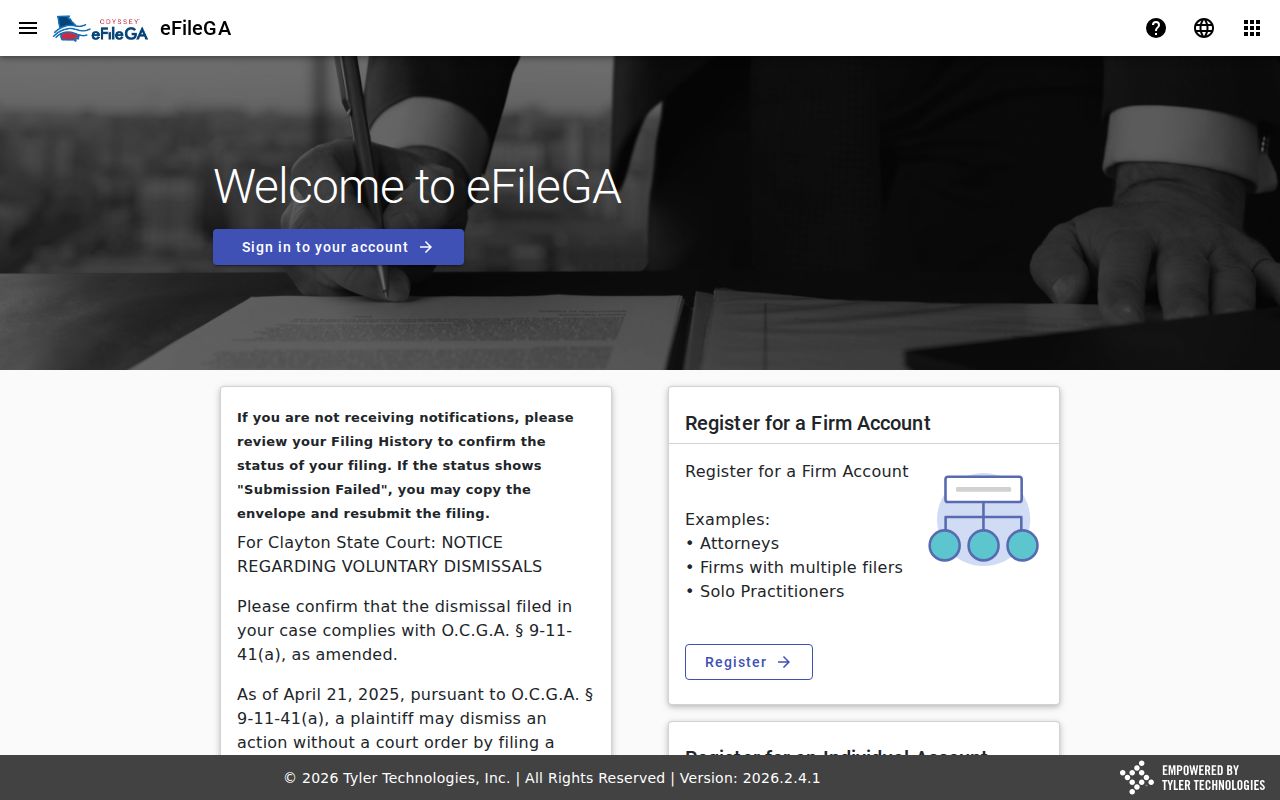
A sign-in screen does not mean anyone can run a free Elbert County civil docket search. When the vendor route is gated, use the clerk terminal or the counter instead.
Types of Civil Cases on the Docket
Court class decides which disputes appear on which docket. Elbert Superior covers major claims, equity, and domestic matters. State Court has limited civil jurisdiction, Magistrate handles lower claims and post-judgment tools, and Probate keeps its own estate and guardianship register.
- Contract, debt, tort, and property disputes assigned to the proper trial court
- Domestic and family matters in Superior Court, subject to access limits
- Lower civil claims and related judgments in Magistrate Court
- Writs, garnishments, and fi fas after judgment
- Estate, will, and guardianship proceedings in Probate Court
Historic real-estate indexes are separate records, not civil case dockets. The Elbert historic real-estate index shows that difference clearly.
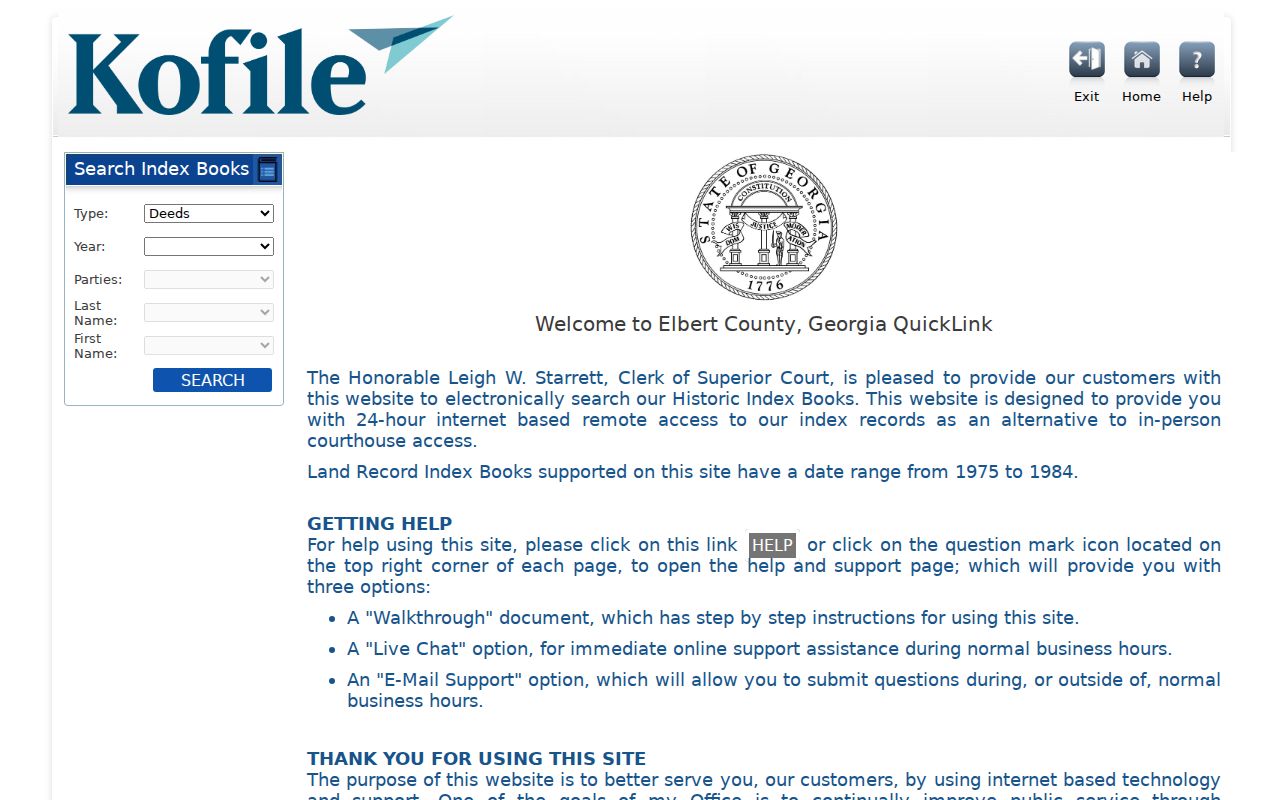
A deed or lien search can support property research. It does not replace the court's filing and judgment register.
Read Elbert County Civil Docket Milestones
The complaint or petition opens the case. A service return shows delivery efforts. The answer is the responding party's pleading. Each carries its own date. Motions ask the judge to act; signed orders show the judge actually acted. Mistaking a motion for a ruling can flip the meaning of the docket entirely.
- Default judgment
- A judgment entered after a party failed to defend as required.
- Nonsuit
- A withdrawal or court-ordered ending whose exact effect comes from the order.
- Reset
- A moved hearing date, not a final result.
- Fi fa
- A post-judgment instrument connected to enforcement or recording.
- Satisfaction
- A later entry showing payment or release as reflected in the record.
When docket wording is brief, read the signed order itself. Elbert has confirmed no local meaning for vendor shorthand like DWOP.
Settings and Hearings on Civil Dockets
A civil setting can take several forms. It might be a motion hearing, calendar call, bench trial, or jury trial. It could also be a specially set proceeding. The latest notice or order is the best source. Clerk confirmation comes next, then the newest setting entry. Old entries can linger after a continuance. Elbert court notices may point to the Historic Courthouse or the Government Center. The Board of Commissioners Meeting Room is another option. Write down the case number, date, time, judge, courtroom, and setting type. A reset changes the schedule but decides nothing. If the notice and the online row disagree, call the clerk. Use 706-283-2005 for Superior or State civil matters. Use 706-283-2016 for Magistrate or Probate. The Elbert County court calendar covers date confirmation across all local channels.
Elbert County Civil Docket Images
A vendor listing in the Elbert County civil docket may stop at the docket line. The pleading image itself can sit behind an account. A fee or court restriction may also block it. Write down the exact title and date of the complaint, motion, order, or judgment. Then pull that named item at the clerk terminal. You can also request it from the clerk directly. An image copied from the register is not a clerk-certified document. The Georgia eCertification portal handles authentication and lookup. Elbert participation and its fees are gated.
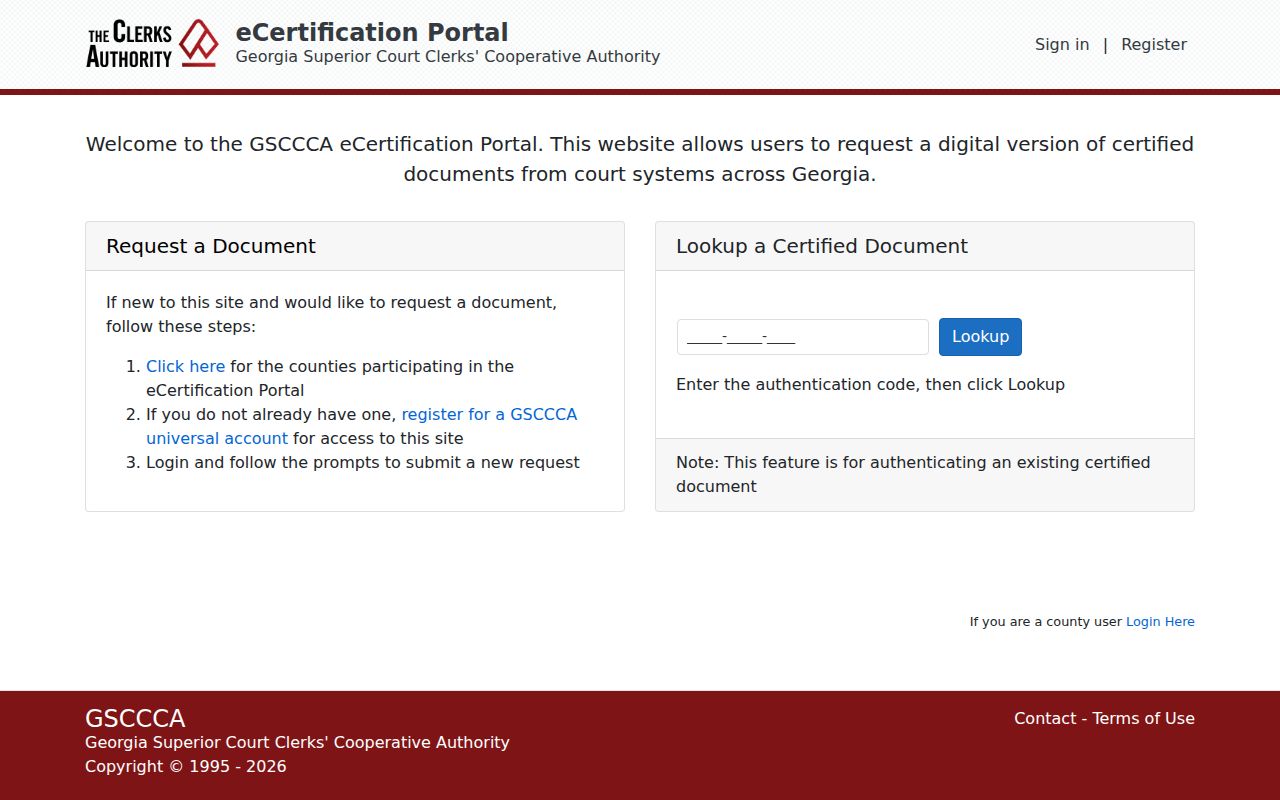
Need a certified copy for court? Go straight to the Elbert County clerk. The portal only lets you view an electronic certified item; the clerk's office handles new certified copies and current ordering steps.
Copy prices are set by the county. A plain copy runs $1 per page, and a certified copy is $2.50 for the first page plus $0.50 for each additional page. The clerk lists no separate civil search, mail, or exemplification fee, so call before you send any funds.
Public Access to Civil Dockets
Uniform Superior Court Rule 21 starts from openness. Most Elbert County court records are public. A statute, court rule, or supported order must say otherwise. Rule 21.6 takes a different tack with personal identifiers, shielding details like those from view. Domestic, adoption, juvenile-related, and sealed items may be redacted or partly hidden. Some are kept off the internet entirely. One quirk trips people up. A register line can stay visible in the civil docket. The document image behind it can stay blocked.
Access rules: Rules 21 and 21.6 address court-record access and protected identifiers. The Georgia electronic-access standard calls for free courthouse viewing or a paper alternative. The Georgia Open Records Act supplies a written-request channel, subject to lawful exemptions.
Before mailing anything, have the clerk confirm the correct route. Once that is settled, send the request to PO Box 619, Elberton, GA 30635. Fax works too. The number is 706-213-7286, where the office accepts it. Elbert County sets no dedicated certified-copy form for civil court files. It promises no fixed response time either.
Separate Elbert County Civil Docket Systems
Georgia runs other systems that handle property notices or certified documents, and none of them counts as a civil docket for Elbert County cases. The Filing Activity Notification System, for example, is an account-based service that sends notices when filings occur in a case you track.
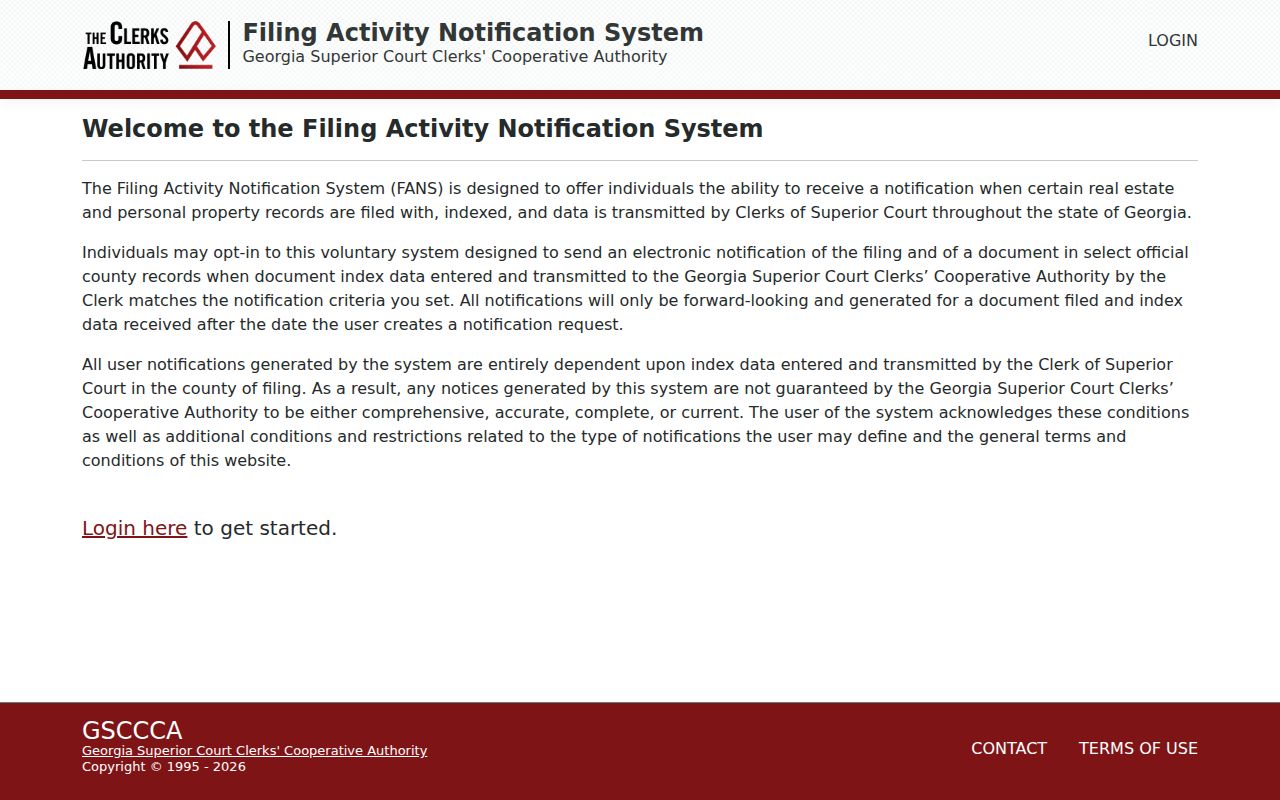
FANS will not hand you the chronological story of an Elbert County civil case. It lacks the pleadings, motions, hearing settings, and judgment history that make up a true docket. Treat it as a notice tool and nothing more, because that is its stated function.
The same caution goes for eFileGA, eCertification, and the land indexes. Each tool does one narrow job. The dependable chain is still the same. First identify the court, then route your search through the official vendor. Use the courthouse terminal. Then call or visit the clerk, mail a written request, or ask the correct custodian directly.
Watch for a common gap. A vendor screen may show the docket entry but not the pleading behind it. When that happens, write down the filing title and the entry date. Note the case number, the court, and the parties too. Do this before you contact the office. Then ask for the exact complaint, answer, order, or judgment rather than requesting the whole file without limits. That approach gives the clerk a clear search target. It also lets you weigh plain-copy against certified-copy needs before charges start to add up.
Post-judgment work can cross several systems. A judgment entry may be followed by later filings. One might be a garnishment, a writ, or a fi fa. Another could be a satisfaction, an appeal, or a property recording. None of those later records changes the picture. A land index or notification service is still not the original Elbert County civil docket. Trace the court entry first. Then follow its exact cross-reference with whatever clerk holds the next record.
Know which counter handles what. Probate and Magistrate material starts at 45 Forest Avenue, or call 706-283-2016. For Superior or State civil records, go to Leigh W. Starrett's office at 12 South Oliver or call 706-283-2005. Keep those two routes apart. That keeps an estate, guardianship, lower civil claim, or major civil action from landing with the wrong custodian.